
Homily, November 9, 2025
From The Pastor
Today’s feast, The Dedication of the Lateran Basilica, is normative to November 9th. Due to its importance, it takes the place of the Thirty-Second Sunday of Ordinary Time. Why is this important?
The Lateran Basilica is the oldest Church in Rome and serves as the Cathedral of the Diocese of Rome of which the Pope is the bishop. Every diocese around the world has a bishop and every bishop has a Cathedral, or Mother Church of the Diocese from which he administers the work of the diocese. This differs from St. Peter’s Basilica in Vatican City which is a city within the city of Rome. St. Peter’s is the Cathedral of the Universal Church. The Pope does not live or work from St. Peter’s. He is present at St. Peter’s on various occasions for large or universal celebrations of importance for the whole Church.
The Lateran Cathedral of Rome was built in 324 during the Papacy of St. Sylvester on land donated by the Laterani family. As the oldest active parish Cathedral in the world, consider the life of grace that has flowed through that building over the many centuries: baptisms, weddings, funerals, confessions, and any number of other celebrations supporting and nourishing the faith of those who worship there. What we celebrate today is not a building, but the unity and life of the Catholic Church and its Sacraments celebrated throughout the universal Church. This is evident in today’s readings.
In the first reading, the Prophet Ezekiel has a vision while in exile in Babylon. It is a vision of hope that describes a new exodus that leads to the rebuilding of the Temple in Jerusalem. The image of flowing water is an obvious reference to Baptism. More widely, the water symbolizes the abundant and unending flow of Divine grace that comes forth from the Church. The fresh water of Divine grace flows into the salt water of the sea and makes it fresh. This image is one of conversion that comes through the work of redemption that washes away sin in the promise of eternal life. These are images of nourishment and healing through fruit trees along the banks of the river that produce endless fruit year-round.
The second reading moves us from the old covenant to the new. The new covenant in Christ is living and dynamic, even earthy. As St. Paul relays, ‘you are God’s building.’ Another translation expresses it as ‘you are God’s farm.’ A healthy farm is living and interactive with each part supporting and giving life to the other parts of the whole. This is an image of a healthy Church. We, as individuals united as one, are the living Body of Christ not identified with a brick-and-mortar building, but with our living Savior, Jesus Christ. It is he who is our foundation who lives and dwells in us and his holy and beloved ones. We ourselves are the living Body of Christ in the world.
When St. Paul reminds us that each of us is a Temple of God this is more than a spiritual image or metaphor. God lives in us through the Holy Spirit given in the grace of Baptism. In receiving the Spirit, we are united in Christ who dwells in us. We are Temples of the living presence of Christ in the world. This is why the Sacraments of the Church are so essential to us as a community of believers. None of us can believe and live in Christ on our own. Nourished by the living Word of God in the scripture and fed at the table of the Eucharist, we are united to one another in our common faith. This is the fruit and the gift of the Incarnation as Christ given as one like us in all things but sin. Through the Incarnation, God unites the world to Himself through the redemption accomplished in the Lord Jesus now tangibly given to us in the Sacraments.
The gospel confirms the living reality of Jesus as the New Temple. The cleansing of the Temple was a profound turning point in the life of Jesus and the revelation of the kind of Messiah He would be. The cleansing of the Temple anticipates the new covenant revealed and accomplished in the dying and rising of Jesus. Jesus becomes the new Temple of our worship. He is the living Temple of the Divine presence in us who believe and profess him as Christ and Lord. Those who cling to a building as the place of worship fail to realize and accept the living truth of the Risen Christ. When Jesus justifies his actions of disrupting the activity of the Temple, he says, “destroy this temple and in three days I will raise it up again.” Unbelieving, the Temple leaders scoff at him relaying the Temple was under construction for 46 years. Jesus is, of course, referring to the Temple of his body/person soon to be crucified, and on the third day rise.
This is our faith. We are the body of Christ in whom the Lord dwells. We are the living presence of Christ in the world. In these changing times, even as the Church wrestles with an insufficient number of priests and a decline in church attendance, please pray that God directs all believers to the fidelity of the faith we profess. Give thanks to God for the life of the Sacraments that sustains the Divine life of Christ in us. Pray for the Church as make our way towards the Kingdom of God promised in Christ.
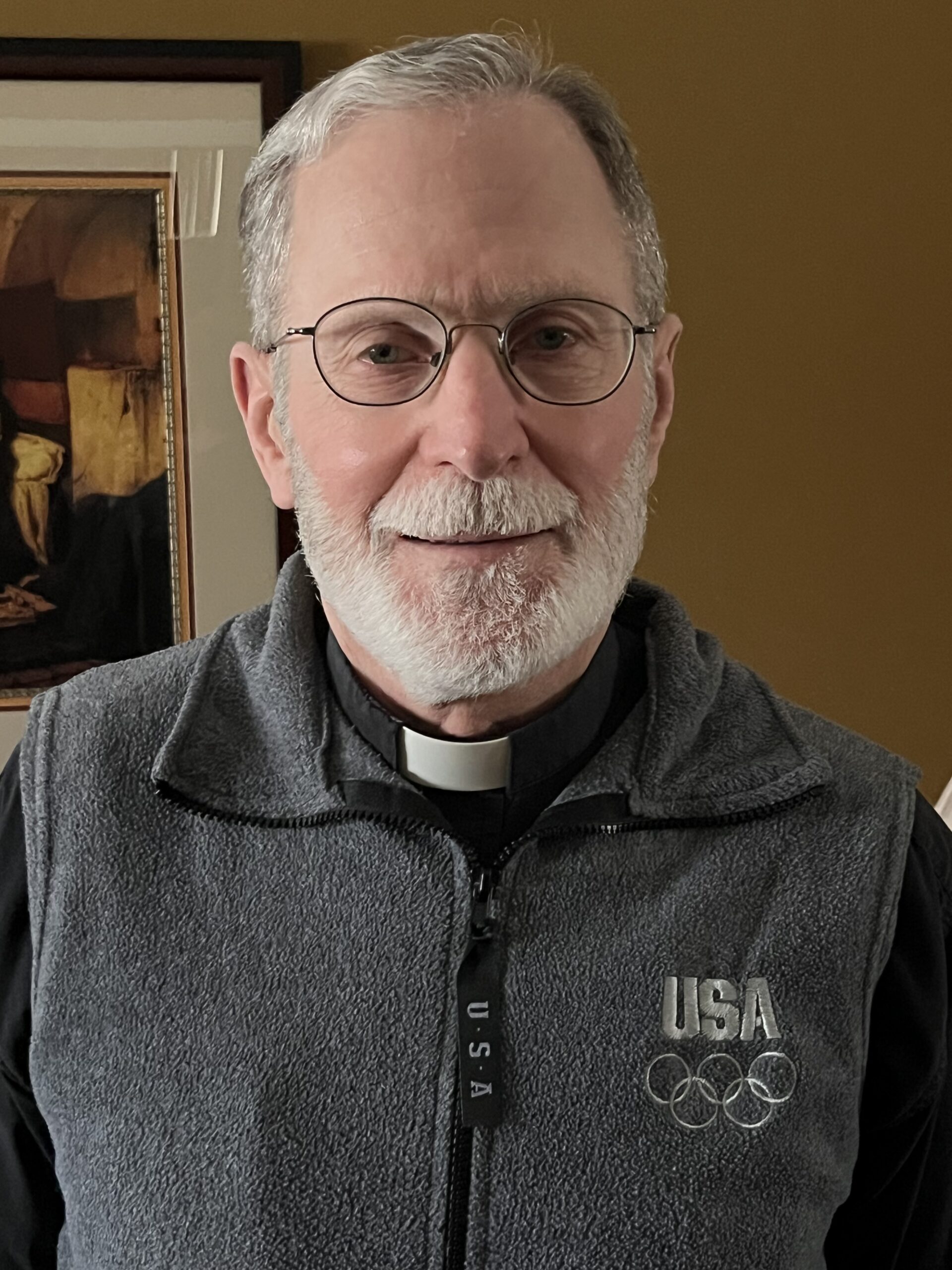
Father John Esper
Recent Sermons
Homily, March 1, 2026
March 01, 2026
Homily, February 22, 2026
February 23, 2026
Homily , February 15, 2026
February 15, 2026