
Homily , January 11,2026
From the Pastor
The Baptism of Jesus marked the closure of one frame of his life that led into a new beginning of public ministry. One expression of the Lord’s baptism in the Jordan River by John is his desire to be one with the people. Jesus knew and felt the pain of the people in the heaviness of their lives and the weight and discouragement of their sin. Jesus identifies with their sin and wants to free them, all humanity, from sin that diminishes the life and Spirit of God in us. Jesus identified with John’s baptism of repentance, not because He needed to repent, but because He would become the agent of our forgiveness that would lead us to a freedom of heart in true conversion. Jesus is saying yes to our human condition in a way that puts him in the position to accept our sinful nature as his own. In the fulfillment of his mission, Jesus accepts the reality of the Cross that bears the fruit of our redemption. For our redemption to be effective, Jesus must take all sin into his human nature so that through his divine nature his dying and rising on the Cross would consume evil, sin, and death. ‘For our sake he who did not know sin became sin that we might become the righteousness of God in him. 2Cor. 5:21.
Jesus accepted John’s baptism as an example for our sake that immediately leads to his Baptism in the Holy Spirit. The baptism of repentance is for the sake of conversion preparing the human heart for the greater Baptism in the Spirit that leads us to new life in God through Christ. The two baptisms are of different origins. John’s baptism was of human origin. Baptism in the Spirit is of Divine origin.
Jesus accepts both for our sake and on our behalf. Coming out of the waters of repentance, Jesus experiences the Holy Spirit seen in the image of a dove. As one in union with the Holy Trinity, Jesus hears the voice of the Father saying, “This is my beloved Son, with whom I am well pleased.” More than a baptism of repentance, Jesus is now confirmed in the affirmation of the Father’s love. This Baptism also has two faces. The experience was deeply personal for Jesus in the call of his human nature to fulfill the role of his divine nature. Secondly, with intentional purpose, the Baptism of Jesus is our Baptism into the life of God: as for Jesus so for us. The humanity of Jesus includes all humanity for all things were created in him, for him, and through him. All the Father bestows on Jesus is also bestowed on us. The belovedness of the Father is intended for and bestowed on all humanity.
Consider, what did the Baptism of Jesus mean to him? How did the power of this divine grace impact Jesus? Beyond the swelling of his heart in hearing the words of his Father’s love for him, Jesus is confirmed in his Divine identity as the Son of God. This must have been deeply moving for Jesus. In his human emotions, Jesus is feeling the deep unconditional love of his Father. This is the love that unites the will of the Father and the Son. Each wants what the other wants, reconciliation for the sake of unity with humanity and all creation. In this essential identity as the beloved Son, Jesus is moved into the next step of his life in public ministry. Ultimately, this ministry will lead to the Cross. The scene concludes with Jesus being led by the Spirit into the desert to ponder the mystery and the grace of all that lies before him.
It begs the question, what does your Baptism mean to you? This is not a question that is often pondered or thought about, yet it is the foundation and identity of our lives in Christ. For myself, I relate to and identify with all that is said above. I was baptized into a generational Catholic family six days after I was born. Raised in a strong Catholic identity with numerous religious in the family, I quickly realized I was baptized into the larger family of the Church. God, Christ, and Church became a primary identity of my life. This does not mean to imply that I was a holy Joe of virtue. Most of you can identify with this snapshot of a 1950’s Catholic family.
Soon enough, as I matured through various stages of faith, I chose to embrace what I had learned. It became a part of me in a deep way. As the years went by, I learned of the Holy Spirit and the call of a vocation. With much fear and trepidation, I entered the seminary at the age of 27 and began a journey toward ordination and priesthood. Early enough, l realized my sinful human nature which led me to embrace the gift of Jesus, the Cross, and the fruit of redemption more fully. I can see, feel, and deeply relate to the grace of my Baptism. I feel at home in Christ and deeply blest in the vocation to which I was called. I do not think of my Baptism in any regular way, but I am aware of feeling and knowing its grace, call, and action in my life.
What about you? What does your Baptism mean to you? How do you feel its grace in your identity, vocation, or state in life? Consider this freely without measure or judgment. Whatever you discover, you are a holy and beloved one of God.
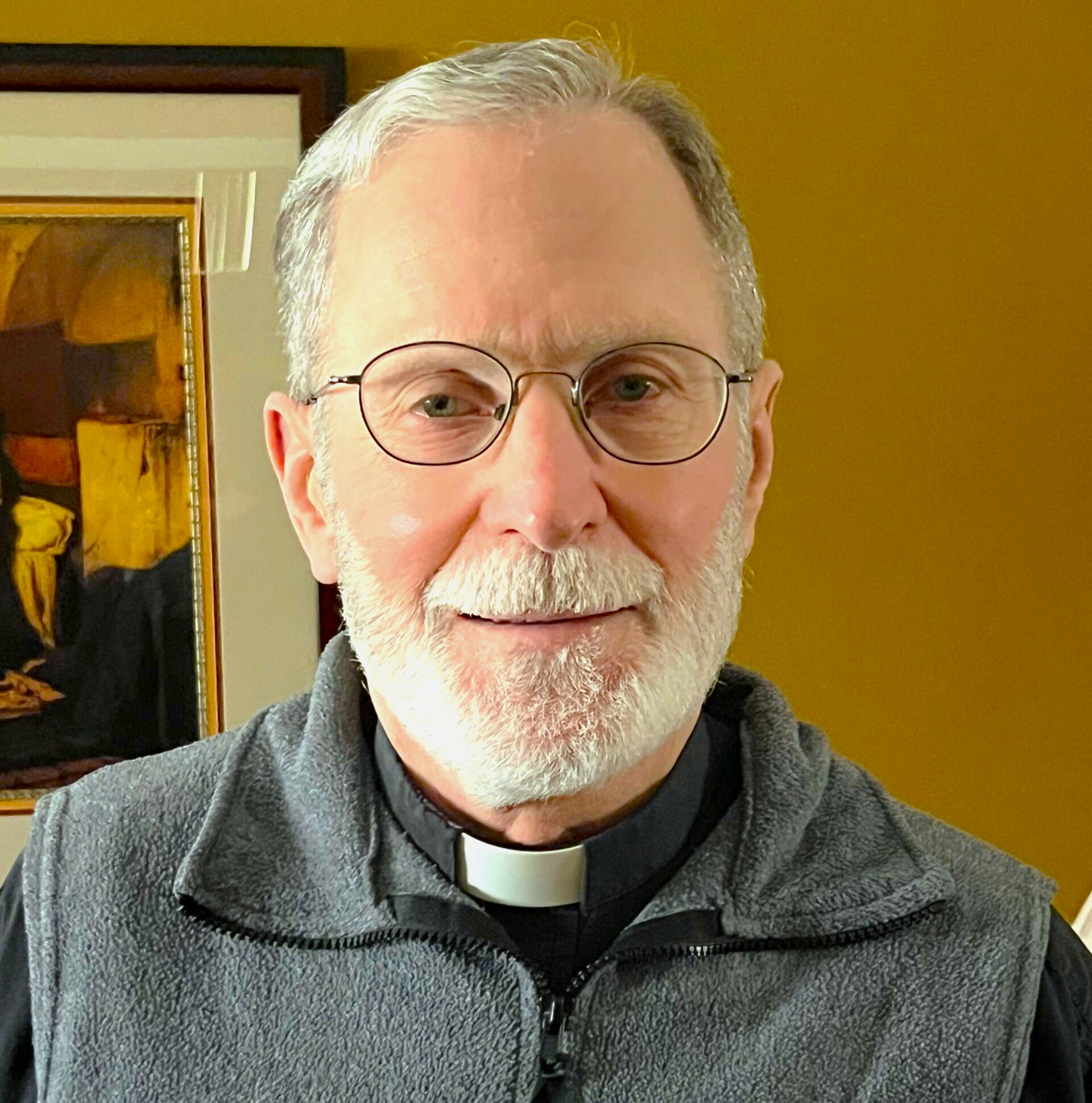
Father John Esper
Recent Sermons
Homily, March 1, 2026
March 01, 2026
Homily, February 22, 2026
February 23, 2026
Homily , February 15, 2026
February 15, 2026