
Homily, February 22, 2026

From The Pastor
Temptation is an essential part of what it means to be human. Temptation is too often seen only as sin and failure. Human temptation is an essential reality that leads towards human development, self-awareness, and personal growth. This kind of self-awareness leads to a mature relationship of faith.
In cycle A of the Lectionary, the first Sunday of Lent always tells the story of the Fall in the Garden of Eden. The story of Adam and Eve is the story and reality of all humanity falling into the pain of sin. This is a classic, undeniable description of human temptation and its consequences. Or should I say benefits? If we only frame the story as a tragedy of human failure that solicits God’s rejection and expulsion from the garden, we are selling ourselves short on the greater lesson the story teaches.
There is no denying the reality of sin and its consequences in personal, relational, social, economic, and every other frame of human encounter. Human beings are prone to sin. As created beings, sin is part of what it means to be human. The challenge is to accept this reality and do all we can to mature beyond the realities of human selfishness and disordered behavior. This is the wisdom and the work of the Lenten season.
Notice the positioning of the first reading and the gospel. In the first reading, humanity through Adam and Eve are deceived by the serpent and are conflicted in the tension of this temptation. In the gospel, Jesus is subjected to temptation as he prepares for his public ministry. Jesus did not go to the desert for a rest or quiet retreat. Jesus was ‘led by the Spirit into the desert to be tempted.’ Humans are tempted, Jesus is human, Jesus must face the reality of temptation. Strengthened in the reality and immediacy of the Father’s love, Jesus sees temptation for what it is and chooses the union of Divine love against the comforts, ego, and power of the world. Jesus, like us, must face temptation to make a clear and personal choice for God.
The sequence continues. Temptation in the Garden of Eden anticipates Jesus in the ‘garden’ of the desert that would lead him to the Garden of Gethsemane. The agony of Jesus in the final garden reframes and restores the effects of the Garden of Eden. Disobedience in the first garden is reconciled by the obedience in the last garden of agony. The necessity of temptation is the freedom of choice toward God or away from God.
Why is temptation so critical in the human story? The fundamental action of the Garden of Eden was not only the act of disobedience, but also the awakening of human conscience. The development of human conscience confirms the gift of free will given by God. It establishes the necessity of moral integrity. Human beings are free to choose right from wrong, sin or grace, darkness or light. Each has its blessing or consequence. The Fall in the Garden establishes the dignity of human nature to choose and accept the gift of a mature relationship with God our Creator. Temptation creates the choice.
If this were not the case, how would human beings ever wake-up, mature beyond childhood selfishness, or learn to choose the good, the right, and the moral way of dignity and integrity that aligns us with God? Jesus himself had to encounter the challenges of temptation to secure his deepest identity in a full commitment to the will of the Father. The temptations Jesus endured confirm the reality of his humanity. Freely choosing the way of the Father’s love defends him against sin, making him worthy to become the Redeemer of all sinners. Free choice is critical. To have free choice there must be an opposite force; good or evil, right or wrong, love or hate. Those with God choose love.
This does not in any way negate the reality of sin and its consequences. Sin is sin, and sin needs redemption for those who seek eternal life with God. Notice that God, in the person of Christ, takes into himself our sin that we may be reconciled by the surpassing love revealed and given on the Cross. The ancient hymn of the Exultant sung of Holy Saturday tells the story, ‘O happy fault, O necessary sin of Adam, which gained for us so great a Redeemer!’ In Christ, we are not saved from sin for the sake of God’s gift of free will. We are redeemed through our sin, feeling its pain, the weight of its shame, and the perception of separation from God. Despite sin, God never leaves us, offering an endless invitation to return.
Lent is the season to reflect on our choices; those that lead us closer to God and those that do not. The challenge is self-honesty, blunt and vulnerable. Do you want your life your way, or to the best of your ability to be a part of God’s way. The choice is yours. God has made his choice. It will always be for you.
Let us pray for each other, our Church, and our world in this holy time.
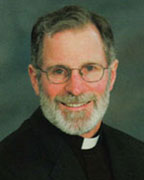
Father John Esper
Recent Sermons

Homily, March 1, 2026
March 01, 2026
Homily , February 15, 2026
February 15, 2026
Homily, February 8, 2026
February 08, 2026