
Homily, October 26, 2025

From The Pastor
‘The Lord is a God of justice, who knows no favorites.’ What is God’s justice?
How do we understand the justice of God against the human justice known in the world? The question is answered in the gospel parable in the way we pray. It is true that God has no favorites. It is God’s desire that all, rich or poor, saint or sinner, realize and accept the gift of God’s mercy in Christ.
God’s justice expresses itself through the Divine nature of love. Divine justice is not like human justice. Human justice implies and expects that everyone gets exactly what they deserve. Human justice is a kind of equation; I am owed, I earned, I expect, I deserve. If this equation is not met, the ‘victim’ feels cheated for being treated unjustly.
The equation of God’s justice is mercy. Mercy is God’s justice and justice is offered in the gift of Divine mercy. God’s justice is an outpouring of unlimited unmerited, freely given, unconditional mercy to the undeserving. We can only fall on our faces and be grateful for the justice of God. If God were to give us what we deserve in the reality of our human weakness, we would all be in a sad and hopeless state.
Why does God have a preferential care for the poor, the vulnerable, and the oppressed? Is this favoritism? No. God is attentive to the cries of the poor and disadvantaged as an act of mercy because they have no other recourse of care. Does God love the poor more than the rich? No. The rich often fail to realize their dependance on the mercy of God because of their ability to care for themselves by themselves.
God blesses and receives the humble of heart, whoever they are. Why is Jesus the mercy of God? Because Jesus took our place, accepted into himself our sin, died on the Cross to defeat the evil of sin, and rose from the dead. Through the death of Christ we are justified, made righteous before the Father through the self-giving of the Son on our behalf. No matter our state or position in life, we are all sinners equally justified by the Blood of Christ who died for all.
The gospel reveals this point through a parable about prayer. Consider the contrast between the Pharisee and the tax collector. The contrast exposes two different kinds of prayer. To be fair, most Pharisees were sincere and righteous religious leaders. As the human condition would have it, there were those who pushed the limits of religion to the point of their own demise.
This Pharisee saw prayer as a matter of comparison and contrast. He compares his devoted law keeping and religious rightness against the lying dishonesty of the cheating, adulterous tax collector. His prayer is no prayer at all. The Pharisee is either talking to himself or giving a weekly spiritual report to God. I thank you I am not like the rest of humanity, greedy and sinful. I pay tithes, and I fast twice a week. I, I, I, me, me, me. That prayer went nowhere except to his personal satisfaction of self-justification. He left no room for God to show him any mercy. In his mind, he did it all on his own. God loves and serves the humble. God leaves the arrogant to their own designs.
The tax collector is painted as an uninviting, sleezy, cheater, worthy of any punishment that might befall him. For all his sinful failures, he admits his unworthiness before God, bows low, and in shame will not raise his eyes to God. This is the one God receives with mercy because in him is a heart begging to be received. “O God, be merciful to me a sinner.” That sinner may or may not be able to change his ways, but this is the one God seeks to save because he owns, admits, and honestly confesses his heart to God. That is the power of Christ and his Cross that justifies repentant sinners.
Some will feel this is too lenient, too generous with God’s mercy, not reverent enough toward the Divine majesty. Compare and contrast. The ways of the world are hard to break. If you think you can get to heaven because you are not as sinful as ‘those people,’ or your devotedness is more pleasing to God than that of others, you are missing the meaning of the Cross. It is pure gift. The high and the mighty need the same redemption as the lowly and the poor. By their stance in life, the lowly and the poor know their need for God and generously accept God’s mercy.
The sinful woman washing the feet of Jesus is a good example. She was not shy in showing her gratitude for the Lord’s mercy. Jesus says to Simon who disdains her: “Because of her great love, her many sins have been forgiven.” Surrender to mercy. May God give us the grace to humbly love more.
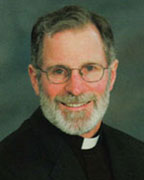
Father John Esper
Recent Sermons

Homily , June 28, 2026
June 28, 2026
Homily , June 21, 2026
June 21, 2026
Homily, June 14, 2026
June 14, 2026