
Homily, September 21, 2025
From the Pastor
Greed and the disordinate love of money are not a new problem. Since the earliest times of organized civilization, societies have struggled with those who idolize the love of money.
Today’s first reading is one example of this social concern. For all the troubles Israel suffered through its generations, there were times of prosperity. During the eighth century, BC., Amos was a poor shepherd and dresser of sycamore trees in Judah, the southern kingdom of Israel. During this period, Israel, the northern kingdom, was enjoying a time of unsurpassed prosperity. The problem was that ninety-nine percent of the money was in the hands of one percent of the people. Amos suffered in conscience over the despair of so many in severe poverty. God sent Amos to preach justice to those living in wanton luxury dis-compassionate toward those who scratch out an existence with next to nothing. Rejected, Amos is sent back to sheepherding.
What causes a person or a culture to have a disordered love of money? The answer has a wide range. There are social, psychological, and experiential causes. Some believe money is the solution to all problems. Some believe money is the path and source of all happiness. For some, money is the basis of self-identity, only to mask the pain of poor self-worth. Others have an excessive need for security due to shame or the fear of poverty. This is caused by a weak or undeveloped sense of interior self-value due to a lack of love, nurturance, or a stable early life. Those who have suffered times of poverty, may in times of prosperity, grasp every dollar gained. With a weak sense of an inner self, some grasp for power and control through wealth for themselves to feel superior over others. Excessive greed can be a substitute for the harder work of real relationships. Greed can serve as a misplaced hope for security in the absence of a life directed in faith. Doubt, fear, or mistrust in Divine providence can lead money to become the focus and goal of a happy life. In a capitalist culture, we are made to believe that wealth can afford us every good thing money can buy. Such goods become too much of our identity.
Notice the grasping and cheating of those with money in the time of Amos. They disregarded the worship of God and resented the Sabbath and days of religious dedication. On such days they could not sell their wares; they planned how they could cheat the poor by fixing their scales and buying slaves as cheaply as possible further demeaning their human dignity. As the reading ends, the prophecy of Amos assures that God will never forget what they have done. God has always held a preferential love and care for the poor and the oppressed. In the Christian gospel this is a non-negotiable.
Why is it that when it comes to money and worldly goods people can be so effective for the sake of personal gain? This contrasts with things of God and religion where people are too often satisfied with merely following the rules of basic expectation. This is clearly a tension of how we are formed in a consumerist culture. This is not a fault of itself, it is the influence of media, advertising, and the messaging that if it is possible we should have all we can get. Jesus makes it clear that a person cannot love both God and money. The heart can have only one core love in life. If God is not our core love, something else will fill the space. This does not mean we cannot have and enjoy the good things that life affords us. It does mean that as professed Christians, God is first, and all other loves flow from the wisdom and providence of God.
Why does the master admire the ingenuity of his steward? What the steward did was dishonest and to the detriment of his master’s goods. Still, the master affirms the servants’ quick thinking given his circumstance. Jesus applauds the servant, not for his dishonesty but for his fast thinking. Jesus asked why the children of the Kingdom are not equally quick thinking in matters of faith. If people of faith were as ingenious in matters of the gospel, the Kingdom of God would thrive in the world. If humanity were to strive for spiritual maturity with the same interest given to the goods of this world, everything would change. Jesus makes it clear that a person can have only one absolute in their lives and if God is not in the first place, everything in front of God will be disordered.
Notice that most of the causes of greed and wealth are rooted in issues of self-identity, positive self-regard, and the realization of our dependence on God and not on goods. Those harmed early in life in the absence of love or other disfunctions face great challenges to regain a positive sense of self-regard and value. The clearest path to this self-discovery is developing a relationship with God and learning to embrace the love of Christ and his saving Cross.
It bears repeating; love is truth, God is love, Jesus Christ is God. You belong to God. You came from God, and you will return to God. Along the way, let all of us pray for the poor and serve those in need with love and respect.
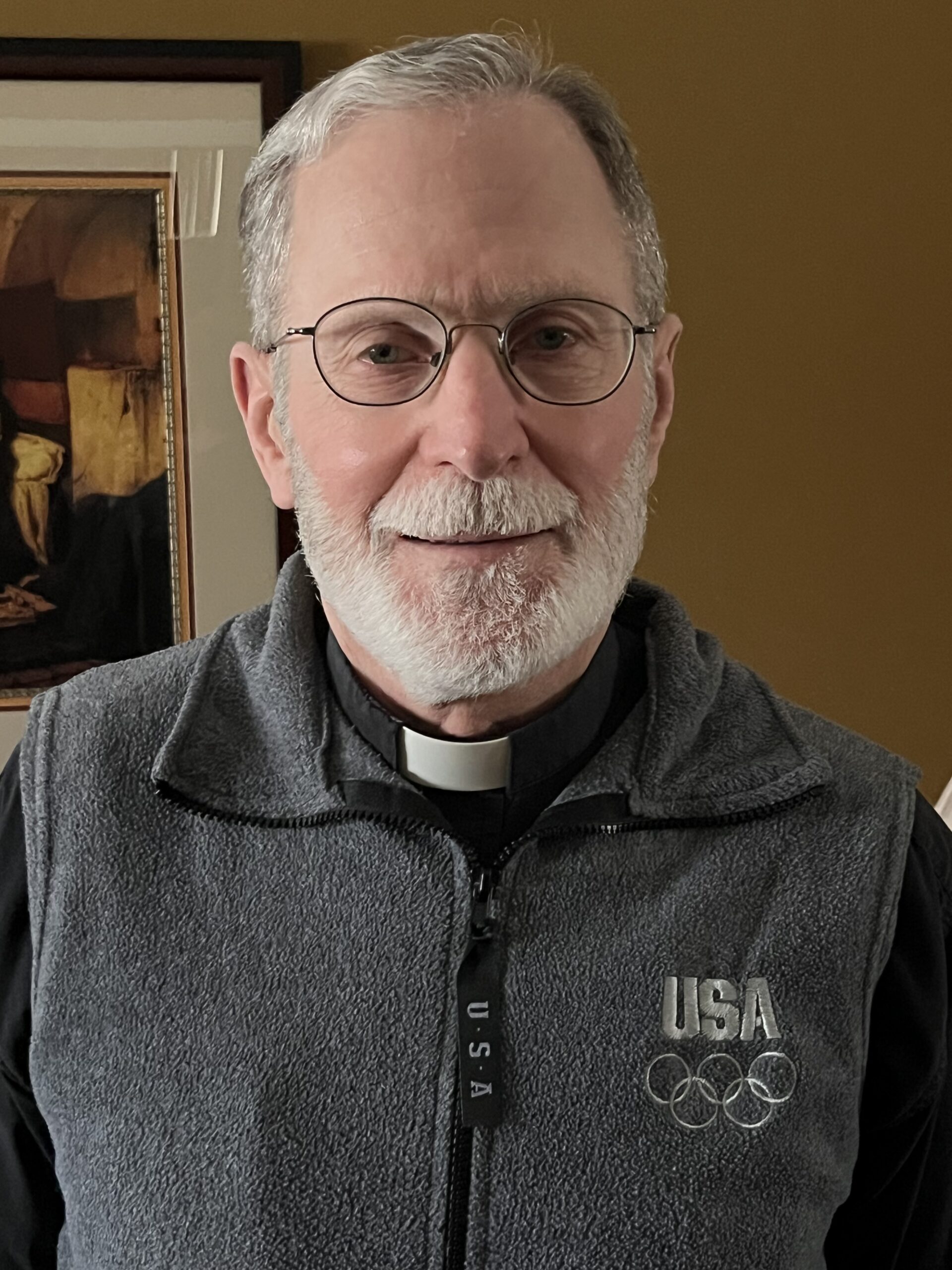
Father John Esper
Recent Sermons
Homily , June 28, 2026
June 28, 2026
Homily , June 21, 2026
June 21, 2026
Homily, June 14, 2026
June 14, 2026