
Homily, September 14, 2025
From The Pastor
The Feast of the Exaltation of the Cross is celebrated on September 14th. This year it happens to fall on a Sunday taking the place of what would otherwise be the Twenty-Fourth Sunday of Ordinary Time. Several historical events are noted and celebrated in accordance with the feast. Early in the fourth century, in the year 320, the Empress Helena is believed to have found what is known as the true cross of Christ. The Feast celebrates the anniversary of the building of a Basilica above the tomb of Jesus in a square between the site of the crucifixion and the burial site of the Lord. These sites were destroyed through the generations. The present Church of the Holy Sepulcher was rebuilt by the Crusaders and dedicated in the year 1149.
Beyond the historical context and commemorations of the relic of the Holy Cross and the building of sacred sites in honor of it, the feast honors the work of the Cross as the instrument of our redemption. The heart of the matter is not only the finding of the Cross but the meaning and accomplishment of the human-divine man who died upon it.
What does the Cross mean to people today? The Cross or a crucifix (a cross holding the image of the body of Jesus) is undoubtedly the most recognized symbol in the world. For some, it is a common piece of jewelry. For believers, it is worn as a sign of witness to the faith, or for the protection of the Crucified Risen One who is our defense against all evil. To the devout believer the Cross is a very personal symbol of the essential reality of God’s love for us through the life, death, and Resurrection of the Lord Jesus.
Today’s feast does not exalt the suffering and death of Jesus. What is exalted is the person and the life of Jesus freely offered on the Cross to reveal God’s love for the world. More than a symbol, the Cross is an expression of the beauty, truth, and love of God through the humble obedience of the Divine Son. The reality of the Cross is the culmination of God’s plan for the redemption of the world to defeat evil and the forgiveness of all human sin. The readings today give witness to this reality.
Consistent with human nature, the Israelites quickly grew weary of their long journey through the desert. In their desperation for food and water, the people complain against God and Moses in their disgust ‘with this wretched food.’ The wretched food they complained about was the manna that God himself provided for them. Despite the miracle of God’s providence in their deliverance from slavery in Egypt and now the food God gives them in a barren desert, the people are not satisfied. They have sufficient food; they just do not like it. To alert them of their offense, the seraph snakes appear biting the people, some of whom died. The people realized their offense against God, admitted their fault, and asked Moses to intercede for them. In an image that anticipates the lifting up of Jesus, Moses instructs the people to make an image of the snake and lift it high on a pole. It serves as an image of their sin. Those who look upon it with a repentant heart are healed.
In the gospel, Jesus is similarly ‘lifted up’ so that all who believe in him may have eternal life. Jesus is the sign, more correctly an image of the reality of our sin. Sin causes an ugly disfigurement of the divine image in which we are created. The Cross is more than a sign or a symbol. It is the reality of what God willingly did to reconcile us from the lie of evil and the disorder of sin.
The Cross reveals the essence of the Divine nature. Jesus is God but did not grasp and cling to his Divine glory. Rather, in humble obedience, he accepted our human condition even to the point of death on the Cross for the redemption of our souls. In his lifting up on the Cross the glory of God is revealed; a humble, self-emptying servant giving his life for the world. This is the exaltation of the Cross: the person of Jesus lifted up in death, reveals the glory of the Father who in turn glorifies the Son as Lord of heaven and earth.
2Corinthians 5:21 says it all: ‘he who did not know sin became sin that we might share in the righteousness of God.’ Jesus alone is the worthy sacrifice. Jesus did not merely take on our sin, as in a backpack. Jesus accepted, became our sin as if it were his own. When Jesus died, our sin died with him. When Jesus rose from the dead we rose with him into a new creation. The purity of his love offered willingly and without resistance was, is, and will always be more powerful than the disorder of our sin. This is why the Cross is so personal to each of us, as well as collectively for the entire world.
Do not fear the Cross. Love the Cross. Embrace it. There is no guilt or blame coming from that Cross; only the pure love of a passionate Savior who glories in the fruit of his work for our redemption. ‘We adore you, O Christ and we praise you, for by your Holy Cross you have redeemed the world.’
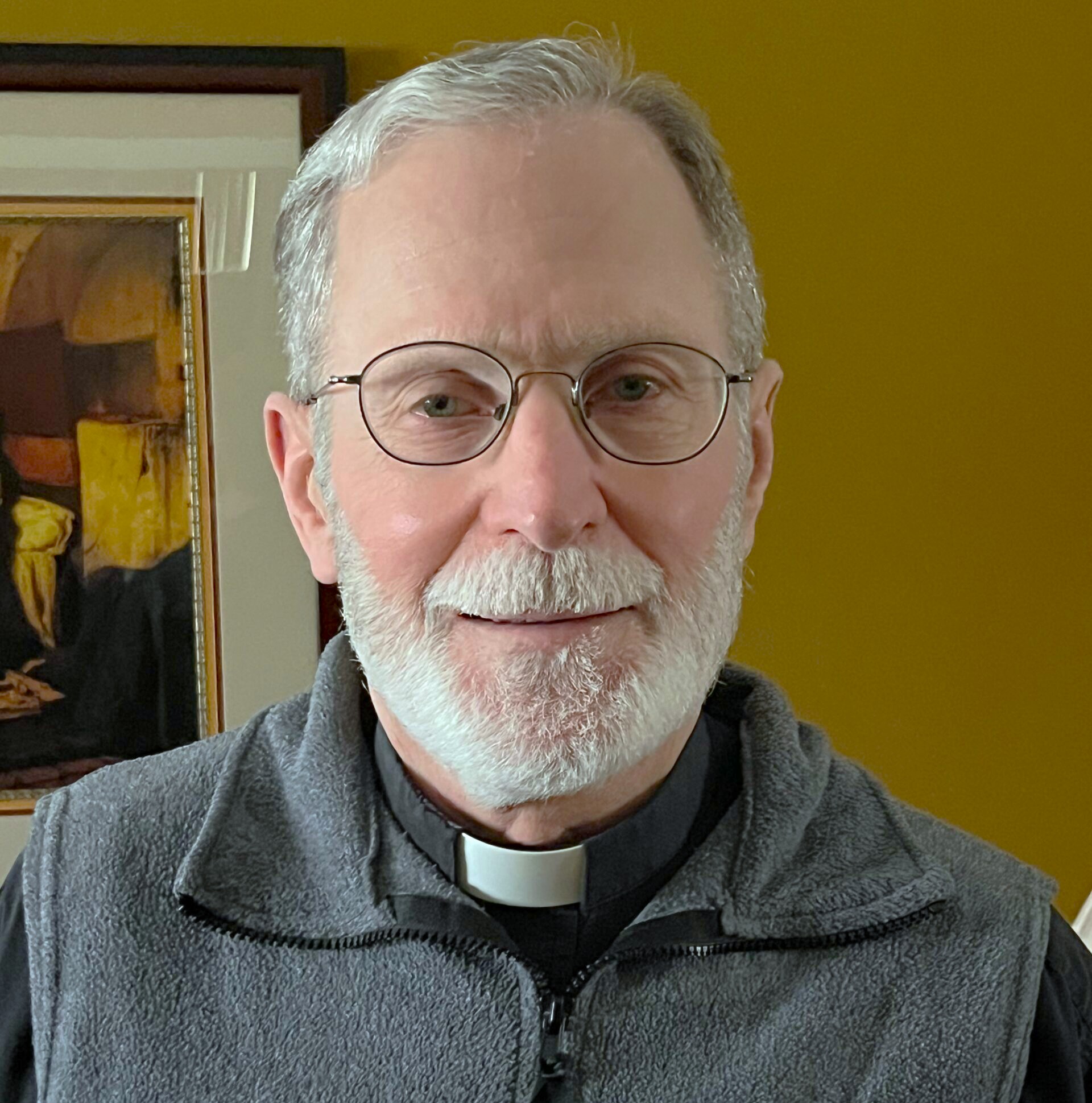
Father John Esper
Recent Sermons
Homily , June 28, 2026
June 28, 2026
Homily , June 21, 2026
June 21, 2026
Homily, June 14, 2026
June 14, 2026